
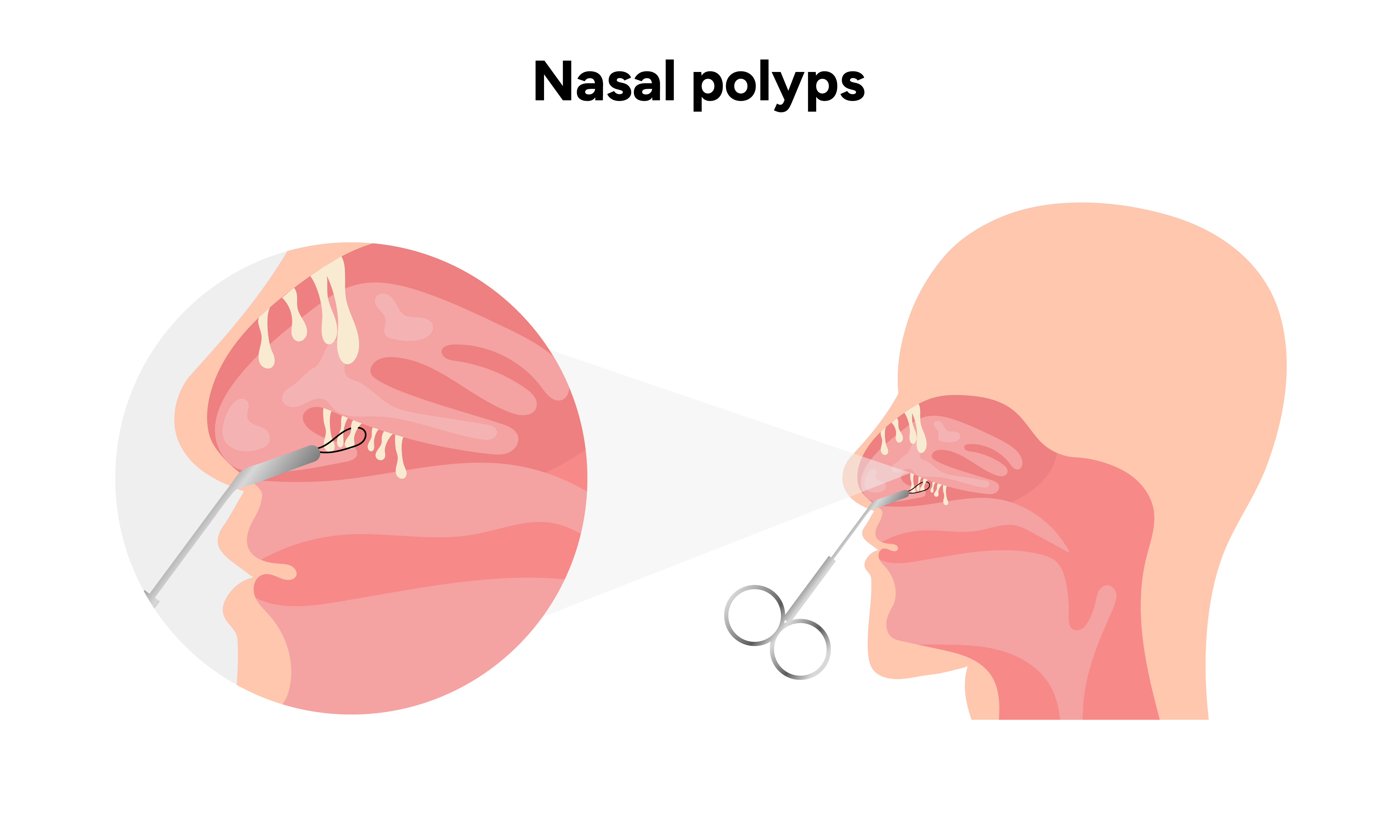
What Are Nasal Polyps?
Nasal polyps are soft, painless growths inside the nose. They often cause chronic nasal blockage that keeps coming back. These growths are not cancer. Instead, they are small swellings of the lining inside your nose or sinuses. Because they block airflow, breathing through your nose can become hard. Many people with nasal polyps also have allergies or asthma. According to the CDC, nasal polyps affect about 4% of adults. Early treatment can help prevent problems.
Common Symptoms
Often, nasal polyps do not cause pain. However, they can lead to several bothersome symptoms. For example, you may notice:
Sometimes, these symptoms can get worse over time. If you have asthma, nasal polyps may make it harder to control your breathing.
Causes and Risk Factors
Doctors are not sure why some people get nasal polyps. However, certain factors can increase your risk. For instance, you may be more likely to develop nasal polyps if you have:
In addition, family history can play a role. If someone in your family has nasal polyps, you may have a higher chance of getting them. Long-term swelling in the nose is the main cause. This swelling can come from infections, allergies, or other irritants.
How Nasal Polyps Are Diagnosed
First, your doctor will ask about your symptoms. Next, they will look inside your nose using a special light. Sometimes, they may use a thin, flexible camera called an endoscope. This tool helps them see deep inside your nose. In some cases, your doctor may order a CT scan. This scan shows the size and location of the polyps. Blood tests or allergy tests may also help find the cause. If you need expert care, your doctor may refer you to an ENT specialist for nasal polyps.
Treatment Options
There are several ways to treat nasal polyps. Your doctor will choose the best option for you. Common nasal polyps treatments include:
After treatment, polyps can return. Therefore, regular check-ups are important. If you are looking for nasal polyps treatment near you, ask your doctor for local options.
Tips for Prevention and Lifestyle Management
While you cannot always prevent nasal polyps, you can lower your risk. Try these tips:
In addition, follow your doctor’s advice for long-term care. This can help prevent nasal polyps from coming back.
When to See a Doctor
If you have chronic nasal blockage or other symptoms that do not go away, see a doctor. Early treatment can stop problems from getting worse. You should also seek help if you:
For ongoing issues, an ENT specialist for nasal polyps can offer expert care. Remember, you do not have to live with chronic nasal blockage.
If you have ongoing nasal blockage, consult an ENT specialist for personalized advice.