
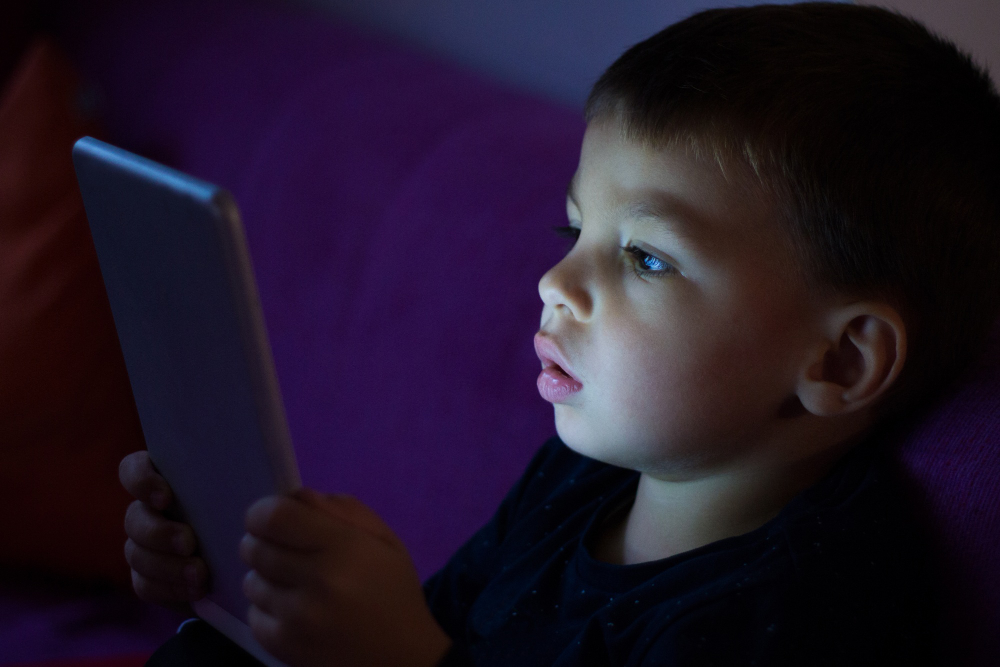
Many parents wonder if too much screen time can lead to speech delays in children. Screen time & speech delays are topics that concern families today. In this blog, we will explain what screen time means, what speech delays are, and explore if there is a link between them. We will also share tips for healthy screen use and signs to watch for in your child.
What Is Screen Time?
Screen time is the amount of time a person spends using devices with screens. These include TVs, tablets, smartphones, and computers. For children, screen time often means watching videos, playing games, or using learning apps. However, not all screen time is the same. Some activities are passive, like watching TV, while others are interactive, like video chatting with family. The World Health Organization (WHO) and the American Academy of Pediatrics (AAP) give guidelines on how much screen time is safe for kids. For example, they suggest no screen time for children under 2 years, except for video calls. For children aged 2 to 5, they recommend no more than one hour per day of high-quality programming.
Understanding Speech Delays in Children
Speech delay means a child is not developing speech and language skills at the expected rate. Children learn to talk at different speeds, but there are common milestones. For example, most children say their first words by 12 to 15 months. By age 2, they often use two-word phrases. If a child is not meeting these milestones, it may be a sign of a speech delay. Speech delays can affect how a child communicates, learns, and interacts with others. Sometimes, speech delay is caused by hearing problems, developmental disorders, or lack of social interaction.
Exploring the Link: What Does Research Say?
Many studies have looked at the link between screen time and child development, especially speech. Some research suggests that too much screen time may increase the risk of speech delays. For instance, a study published in JAMA Pediatrics found that children who spent more time on screens had a higher chance of speech and language delays. The reason may be that screen time can replace face-to-face interactions, which are important for learning to talk. However, not all screen time is harmful. Video chatting with family can help language skills. Still, experts agree that real-life conversations are best for speech development.
Causes and Risk Factors
Speech delays can have many causes. While screen time is one possible factor, others include:
In addition, children who spend more time with screens may have fewer chances to talk and listen. This can slow speech and language growth.
Signs Parents Should Watch For
Early signs of speech delay can be easy to miss. However, parents should look for these signs:
If you notice these signs, it is important to talk to your child’s doctor. Early help can make a big difference.
Tips for Healthy Screen Use
Healthy screen habits can support your child’s development. Here are some tips:
With these steps, you can help reduce screen time and support your child’s speech and language growth.
Prevention and Early Intervention
Preventing speech delays starts with healthy routines. For example, limit screen time and encourage talking, singing, and reading together. If you have concerns about your child’s speech, seek help early. Speech-language specialists can assess your child and suggest activities to boost language skills. Early intervention often leads to better outcomes.
In summary, while too much screen time may be linked to speech delays, balanced use and active play are key. If you have concerns, consult a pediatrician or speech-language specialist for personalized guidance.